
Introduction
A customer in Ajah watches a video of a full, glossy wig and orders it for an important event. The delivered unit is thinner at the ends, its length was measured differently, and the advertised look depended on styling that was never included. The retailer believes the order was correct. The buyer feels misled. The argument began long before dispatch, when the product promise was not specific enough.
Selling human hair, wigs, bundles, closures, frontals and weave-on in Lagos is not only about creating an attractive display. Customers need enough evidence to judge quality, choose suitable products, understand the complete cost and know what happens if something goes wrong. Retailers need reliable suppliers, accurate stock information and a sales process that staff can repeat.
This guide explains how to make truthful product claims, reduce avoidable disputes and build a stronger commercial operation using branding, e-commerce, content, CRM, analytics and automation. It is educational guidance rather than evidence that a particular seller has achieved these results. Prices and calculations below are illustrative, not live market quotations.
Table of Contents
- Introduction
- 1. Understand What Hair Customers Are Really Buying
- 2. Explain Hair Terminology Without Overclaiming
- 3. Create Listings That Explain the Whole Purchase
- 4. Photograph and Film the Product Without Distortion
- 5. Test Suppliers, Inspect Stock and Track Batches
- 6. Price for the Complete Customer Experience
- 7. Set Honest Delivery, Return and Complaint Expectations
- 8. Build a Website, Inventory System and CRM That Work Together
- 9. Market With Evidence, Useful Content and the Right Channels
- 10. Measure Customer Confidence Alongside Revenue
- 11. A Practical 30-Day Improvement Plan
- 12. How Wisdom Egba Can Help Build and Scale the Hair Business
- Conclusion
1. Understand What Hair Customers Are Really Buying
A request for a 20-inch wig does not tell you whether the buyer prioritises comfort, fullness, colouring, affordability or a particular finished style. Ask about the occasion, planned styling, cap fit, maintenance routine, deadline and the budget for the complete purchase. A professional wearing a wig every day may value different features from a bride booking a stylist.
| Buyer | Important decision | What to clarify |
|---|---|---|
| Everyday wearer | Comfort and upkeep | Cap size, construction, care routine and realistic maintenance |
| Bride or event customer | Specific finished look | Stylist requirements, lace type, fullness and event deadline |
| Student on a budget | Total affordability | Hair cost, installation, delivery and lower-cost alternatives |
| Salon or reseller | Consistency | Batch specifications, quantity, documentation and remedies |
| Buyer outside Lagos | Remote confidence | Actual-unit video, measurements, delivery and applicable return rights |
Instead of pushing the costliest item, explain the trade-off: a shorter product with fuller ends may suit an agreed budget better than a longer unit with additional styling costs. Useful consultation questions include, “Will you wear it daily?” and “Does your budget cover installation and delivery?” The goal is to make a recommendation the seller can stand behind.
2. Explain Hair Terminology Without Overclaiming
“Human hair” describes fibre composition; it does not establish origin, cuticle alignment, processing history or guaranteed lifespan. Disclose synthetic blends. Do not state “100% human hair” when you lack a reliable basis for that claim. In trade usage, Remy generally concerns cuticle alignment, while virgin refers to a processing history; neither term is a blanket quality guarantee.
Terms such as raw, luxury, premium, double drawn, 10A or 12A require an explanation of what the seller can actually verify. Ask the supplier for specifications and testing evidence. Check whether “Brazilian” describes a texture or claims geographic sourcing. A shipping origin is not proof of the hair donor's origin.
| Claim | Stronger customer-facing explanation |
|---|---|
| Premium grade | State the measured length, unit weight, construction and inspection notes instead of relying on a grade |
| Full ends | Show a clear photograph of the actual tips, with and without styling where useful |
| Can be bleached | Disclose what was tested, on which sample and the limits of that test |
| Imported Brazilian hair | State verified origin if established; otherwise describe the texture accurately |
Uncertainty is not a reason to invent certainty. The correct response may be, “We have not independently confirmed that characteristic; we can share the supplier documentation and actual product footage.”
3. Create Listings That Explain the Whole Purchase
A caption reading “Luxury hair, DM for price” leaves almost every purchase decision unresolved. Build one approved specification record per product or batch, then reuse it consistently across the website, WhatsApp catalogue and social channels. Include type, fibre composition, length and measurement method, weight, texture, colour, closure or frontal dimensions, cap fit, fullness, condition, included services, stock status, care, dispatch and return information.
Example product description: “18-inch straight 5 x 5 closure wig. Actual unit shown after straightening; measured straight. Adjustable straps. Natural dark colour. Wig and basic styling included. Installation and delivery charged separately. This batch has not been tested for bleaching, so a lightening result is not promised. Request cap measurements and actual-unit footage before payment.”
Use only specifications verified for the unit being sold. A demonstration styled on a model is not evidence that installation or customisation is included. Place total-cost information near the product price rather than revealing essential charges at the last step of checkout. Give the customer a written order summary before collection or dispatch.

4. Photograph and Film the Product Without Distortion
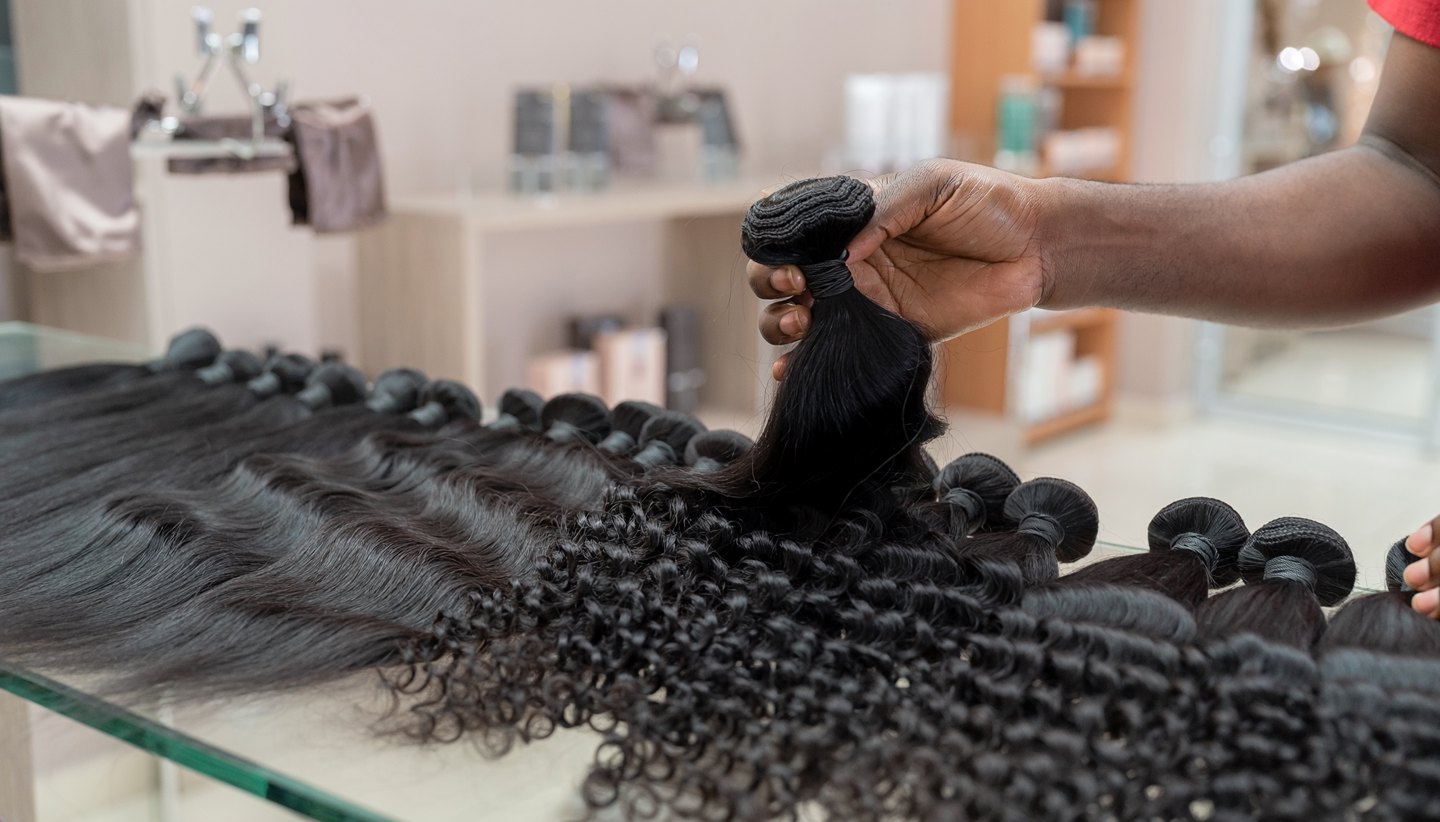
A repeatable shoot should show the complete unit in neutral light, the lace or weft, a close-up of the mid-lengths and tips, a length measurement and a gentle movement or comb-through demonstration. Explain any colouring, curling, plucking, trimming or styling done before filming. If colour appears different under warm and cool light, show both rather than editing the product into an idealised shade.
Distinguish supplier footage from the exact item in stock. Never use a dense or expensive wig to advertise a less full item without explaining the difference. If a model demonstrates an installed frontal, clarify which styling services are included in the customer's order.
AI-generated visuals can support education or concept campaigns when clearly identified as illustrative. They cannot prove that a particular inventory item exists, has been tested or produces a demonstrated result. Customer photographs and feedback require appropriate permission. Authenticity is not a restriction on good design; it gives beautiful content something credible to communicate.
5. Test Suppliers, Inspect Stock and Track Batches
Advertising weak stock at scale can increase disputes as quickly as enquiries. Before placing large orders, request samples, written specifications and clear remedies for inconsistent or defective goods. Compare each shipment with the agreed description. Record measured length, weight, lace construction, the condition of tips and wefts, inspection date and any relevant test results.
Use a batch code so customer orders can be traced to a specific shipment. A practical record links supplier, shipment date, batch, inspection report, product codes and customer orders. If multiple complaints cluster in the same batch, stop promoting it while investigating. Keep photographs of products before customisation and a record of the tests performed.
A wash test or visual inspection can identify some problems but will not, on its own, prove donor origin or every fibre-composition claim. Use qualified product inspectors or laboratories where the claim needs that level of evidence. Import requirements and any applicable labelling standards should also be checked with competent advisers.
6. Price for the Complete Customer Experience
Calculate landed stock cost, payment fees, packaging, delivery subsidies, marketing acquisition cost, stylist or customisation labour and expected resolution costs. Some are fixed expenses and some vary by order; do not mistake revenue for profit. Where a customer supplies a total budget, distinguish the hair price from installation and delivery before recommending an option.
| Illustrative order economics | Amount |
|---|---|
| Sale price | ₦150,000 |
| Landed hair cost | ₦95,000 |
| Attributable advertising | ₦12,000 |
| Packaging and payment costs | ₦5,000 |
| Delivery subsidy | ₦3,000 |
| Contribution before overhead and tax | ₦35,000 |
If a preventable dispute then causes a ₦20,000 partial refund and ₦6,000 of extra logistics, the contribution falls to ₦9,000 before staff time and overhead. These figures are illustrative, not actual retailer results. They show why the quality of each sale matters. Better descriptions may reduce avoidable disputes, but they should be measured rather than assumed to guarantee higher profit.
7. Set Honest Delivery, Return and Complaint Expectations
Differentiate “in stock,” “awaiting customisation,” “made to order” and “preorder.” Give a realistic dispatch estimate and explain any uncertainty, especially when the buyer has an event deadline. Order confirmations should restate the actual product, styling included, price, delivery method and agreed exceptions.
Consumer rights do not disappear because a merchant writes “no refunds” on Instagram. Nigeria's Federal Competition and Consumer Protection Act addresses accurate descriptions, misleading representations and remedies in qualifying circumstances. Its provisions also matter when the delivered goods differ materially from the description or sample. See the FCCPC consumer-rights guidance and the Federal Competition and Consumer Protection Act. Seek appropriate legal advice for a specific dispute.
Distinguish a change-of-mind request from a defective, incorrect or misdescribed item. Explain any reasonable inspection, hygiene or customisation terms before payment while preserving applicable statutory protections. To investigate a complaint, ask for the order reference, a description of what differs and helpful photos or videos. Do not require an unboxing video as the only way a complaint can be considered.
A useful first reply is, “Thank you for explaining the problem. Please share your order number and photos of the difference. We will compare them with the approved specifications and contact you by tomorrow afternoon.” A specific, realistic service commitment is better than blame or silence.

8. Build a Website, Inventory System and CRM That Work Together
The foundation of reliable digital selling is a single approved product record. Product ID, batch, specifications, stock, media, price, care, order terms and known limitations should flow into every channel. Your website should let buyers compare meaningful options by length, composition, construction, size and budget, with mobile checkout, suitable payment methods and dependable order confirmation.
Use a CRM to record enquiries, preferences, cap measurements where appropriate, purchase history and promises made during the sales conversation. Assign every promised actual-unit video, delivery check or complaint follow-up to a responsible staff member with a status. Maintain appropriate data access and retention practices; collect only the customer details needed to fulfil the purchase or support a lawful communication purpose.
| System | Business task | Control needed |
|---|---|---|
| Product catalogue | Consistent listings and stock | Approved specifications and batch status |
| E-commerce | Compare, order and pay | Accurate totals, checkout and confirmations |
| CRM | Manage enquiries and cases | Ownership, history and follow-up deadlines |
| Inventory and fulfilment | Reserve, pack and dispatch | Order-to-batch traceability and verification |
| Analytics dashboard | Measure performance | Defined metrics and honest attribution |
Automation should send useful order updates, delivery information, care advice and properly consented marketing follow-ups. An AI assistant must answer from verified inventory data and refer uncertain quality or returns questions to a person. Automation that repeats an unverified claim is not an improvement.
9. Market With Evidence, Useful Content and the Right Channels
Hair content should answer real buyer questions: how to measure length, how closure and frontal construction differs, how fullness looks without styling, what cap measurements mean, what colouring results have actually been tested, and which charges are included. A single photographed unit can support an honest product listing, a measurement video, a maintenance guide and a short comparison post.
Build search pages for genuine buyer intent, such as “closure wigs in Lagos” or “how to measure for a wig,” without inventing rankings, customer results or stock scarcity. Local business profiles must display accurate contact details, service areas and opening information. Social campaigns should link to the exact product shown, not an unrelated or substituted variant.
Before increasing paid advertising, confirm that the product is available, the landing page explains the offer, and the team can handle orders and complaints. Start with controlled tests. Track qualified enquiries, verified sales, acquisition cost and post-sale issues together. Influencers and creators must accurately identify paid promotions and demonstrate the product received, rather than making claims the retailer cannot support.
10. Measure Customer Confidence Alongside Revenue
A strong business dashboard measures both demand and delivery of the promise. Define how each metric is calculated, which system provides it and who reviews it. Pair enquiry-to-order conversion with product mismatch complaints; compare order value with costs of replacements; compare sales growth with stock and fulfilment capacity.
| Metric | Question it answers |
|---|---|
| Enquiry-to-order conversion | Are product details helping the right buyers decide? |
| Complaints by batch | Is a specific shipment associated with recurring problems? |
| Returns and replacement costs | How much contribution is lost resolving failures? |
| Delivery promise accuracy | Did the order arrive within the communicated window? |
| Repeat purchases and referrals | Are customers choosing and recommending the brand again? |
| Contribution after resolution costs | Are sales commercially healthy after avoidable losses? |
When several customers complain about thin ends, inspect the original video, fullness claims, unit condition and supplier batch. When buyers abandon after receiving the total price, review undisclosed fees. The purpose of analytics is to identify a correctable problem, not to decorate a report.
11. A Practical 30-Day Improvement Plan
Week 1: Audit the promise. Review the best-selling listings, identify unclear composition and origin claims, check price inclusions and separate actual-stock content from supplier references. Prioritise the errors that could materially change a buying decision.
Week 2: Document product evidence. Inspect current units, photograph the lace and ends, standardise length and weight measurements, assign batch codes and create an approved listing template. Record what has been verified and what remains uncertain.
Week 3: Fix the sales process. Update mobile product pages, checkout totals, order messages, fulfilment checks and complaint procedures. Train staff with three sample scenarios: an everyday buyer, a bride with a deadline and a buyer reporting a mismatch.
Week 4: Publish and measure. Release useful buying guides and evidence-based demonstrations; test selected campaigns only for verified stock. Review conversion, complaint reasons, dispatch promises, returns and contribution. Use the results to decide which products and processes deserve more investment.
12. How Wisdom Egba Can Help Build and Scale the Hair Business
Growth requires more than running advertisements. We connect strategy, brand identity, product presentation, sales systems, marketing and operations so that the business delivers the experience its campaigns promise. The engagement is designed around the owner's actual budget, inventory readiness, team and commercial goals.
- Strategy and business foundation: Define target customers, positioning, product range, competitor considerations, pricing assumptions, margin targets and launch priorities.
- Brand identity: Develop a distinctive visual identity, messaging, packaging guidelines, care-card and social design system without making unsupported premium claims.
- Catalogue and quality workflows: Set up product specifications, batch codes, supplier assessments and stock records. The owner and qualified specialists remain responsible for sourcing and independent physical verification.
- Photography and educational content: Plan actual-stock photography, demonstrations, product descriptions, care guides, comparison videos and realistic social campaigns.
- Website and online shop: Build a responsive store with filters, detailed listings, order confirmation, compatible payments, delivery details and measurable checkout steps.
- Social and WhatsApp selling: Organise profiles, catalogues, enquiries, consultation scripts and repeatable order handoffs.
- SEO and advertising: Optimise genuine product and buying-guide pages, test Meta or search campaigns where suitable, and evaluate the quality of acquired orders instead of raw reach alone.
- CRM and automation: Connect enquiries to customer records and sales stages, assign follow-ups, automate appropriate order updates and obtain consent for promotional messaging.
- Operations and training: Document order checks, staff responsibilities, complaint handling, dispatch, referrals and retention programmes.
- Reporting and expansion: Build dashboards for margin, acquisition, inventory, fulfilment and customer experience, then plan new products or territories when the evidence supports expansion.
Deliverables may include a growth roadmap, brand system, approved digital catalogue, online store, connected CRM, marketing assets, workflow automation and a management dashboard. The exact scope should be agreed before implementation. Advertising fees, stock purchases, logistics and third-party subscriptions are separate unless explicitly included.
Conclusion
Hair buyers should not have to decode every trade term or investigate every product claim before placing an order. A professional retailer can explain differences, show genuine evidence, clarify total costs and resolve problems fairly. That is how attractive marketing becomes a promise the business can honour.
For a Lagos hair brand, product accuracy, supplier controls, credible presentation, reliable customer service and connected digital systems can reinforce one another. Start with the promise, document the evidence, make the buying process clear and measure whether the experience matches customer expectations.
Make a clear promise. Show the evidence. Deliver what the customer understood she was buying.

Wisdom Egba
Strategist, Growth Architect and Technology Consultant.
Comments
No approved comments yet. Start the conversation below.