
Customer records are duplicated, incomplete or spread across disconnected tools.
Practical Business & Technology Solution
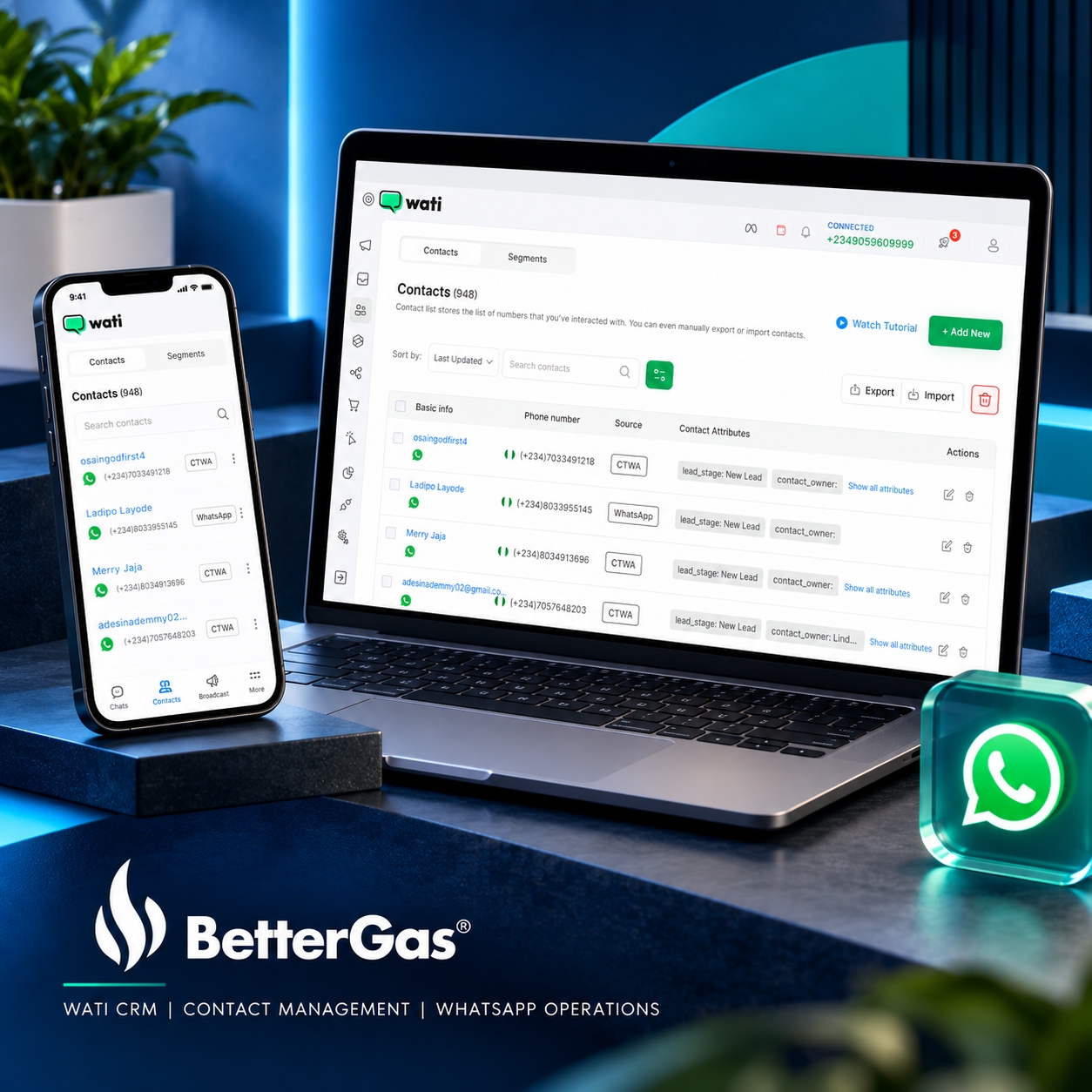
CRM WhatsApp Integration
CRM WhatsApp Integration: diagnose the cause before changing the system.
Plan and implement crm whatsapp integration with the correct configuration, permissions, data flow, validation and handover. The objective is to reproduce or measure the problem, isolate the responsible layer and implement a change that can be validated rather than applying unrelated fixes.
Request a Diagnostic ReviewCommon Symptoms
What you may be experiencing.
Sales stages, ownership and follow-up are inconsistent across users.
Integrations or automations move data unreliably or create unexpected records.
Possible Causes
Several layers can produce the same visible problem.
The investigation treats these as hypotheses to test, not conclusions to assume.
The CRM data model may not match the real sales or service workflow.
Permissions, lifecycle stages or ownership rules may be undefined.
Integrations can fail when identifiers, field mappings, event timing or retry behavior are weak.
Diagnostic Process
Trace the issue in a deliberate order.
Workflow
Document how a contact, lead, deal or service case should move.
Data model
Define records, required fields, identifiers and relationships.
Permissions
Set ownership and role access around actual responsibilities.
Pipeline
Configure stages, actions and exit criteria.
Integrations
Map email, WhatsApp, forms, APIs or ERP data deliberately.
Validation
Test representative records, automations and exception cases.
Recommended Interventions
Fix the responsible layer, then validate the result.
Recommended intervention
Redesign pipelines and lifecycle stages
Configuration correction
Clean and map data before migration
Implementation change
Configure permissions and ownership
Validation action
Repair field mappings and integration logic
Operational follow-through
Implement tested follow-up automation with clear stop conditions
Relevant Platforms & Tools
Work with the systems actually involved in the problem.
WhatsAppWhatsApp
HubSpot CRMHubSpot CRM
SalesforceSalesforce
Zoho CRMZoho CRM
Microsoft Dynamics 365Microsoft Dynamics 365
What I Can Help Implement
Diagnosis, remediation and validation.
- Diagnostic findings
- Prioritized remediation plan
- Approved configuration or implementation changes
- Validation evidence
- Handover and prevention recommendations
Information Needed
Prepare evidence without sharing secrets.
- Current CRM/platform name
- Example workflow and stage definitions
- Data sample with sensitive information removed where possible
- Integration list and known failure examples
Never submit passwords, private API secrets, recovery codes or access tokens in a public form.
Featured Services
Relevant expertise for the next business priority.
Business Consultancy & Advisory
Strategic guidance, operating clarity and implementation support for important business decisions.
Explore ServiceDigital Marketing & Advertising
Search, paid media, content, analytics and acquisition capabilities connected to measurable business objectives.
Explore ServiceWeb Development & Management
Professional websites and digital experiences designed around usability, performance and maintainability.
Explore ServiceArtificial Intelligence & Automation
Practical AI applications, agents and workflows designed around governed business processes.
Explore ServiceCustom Software, SaaS, CRM & ERP
Business applications, integrations and customer systems aligned with real operational workflows.
Explore ServiceRecruitment & Staffing
Role definition, talent sourcing, assessment, selection and workforce coordination.
Explore ServiceFeatured service 1 of 6: Business Consultancy & Advisory
Selected Work
Relevant project evidence where approved records exist.
Common Questions
Important questions before making changes.
What usually causes crm whatsapp integration?
There can be several causes across configuration, data, platform policy, infrastructure or downstream business process. The diagnostic sequence is designed to test likely causes rather than assume one explanation applies to every account.
What access is required?
Use provider-approved invitations, roles or temporary access mechanisms where needed. Do not send account passwords, private API keys, recovery codes or access tokens through a public form or ordinary email.
Can the issue be fixed without rebuilding everything?
Often yes. The first goal is to isolate the smallest responsible layer. Rebuilds or migrations should be recommended only when the evidence shows the current architecture cannot meet the requirement safely or maintainably.
How is a fix validated?
The original failure condition is reproduced or measured before the change, then tested again afterward together with important adjacent functions. Where possible, logs, delivery results, conversion evidence or representative records are retained.
What if the cause is outside your control?
The diagnosis should identify the external dependency—such as a provider policy, regulator, third-party API or customer-side process—and document the next escalation or alternative rather than promise an outcome that cannot be controlled.
Consultation
Describe Your Challenge Describe the problem and the evidence you already have.
The first objective is to understand the failure clearly enough to recommend the right next action.